
The end of 2025 saw an increase in economic pressure and an acceleration in digital automation. As a result, Gen Z narrowed their spending to brands that offer real-world agency. They started to scrutinize their discretionary purchases and instead protect tools that allowed leverage, i.e. tools that gave them more independence or control of their time.
Gen Z has moved past the influence economy. In Q4 2025, brand equity gains weren’t driven by who had the loudest moment or the biggest following – they were driven by those brands that gave Gen Z more control over their lives.
This generation is no longer buying brands as symbols of identity. They’re buying systems that help them operate independently – to build income, manage risk, and function on their own terms.
In Q4 2025, Gen Z didn’t buy the brand – they bought the leverage.
Why these brands popped with Gen Z
Shopify (+15.0): The engine room
What changed in Q4
On December 10, 2025, Shopify launched Agentic Storefronts, allowing products to surface and transact directly inside conversational discovery platforms such as ChatGPT and Perplexity.
The viral kick
Industry reporting showed traffic from generative AI environments to commerce destinations accelerating sharply in Q4. Shopify became the first major platform to let creators own that emerging AI shelf space rather than rent it.
Why it worked with Gen Z
Shopify sells infrastructure, not aspiration. It lowers the distance between having an idea and generating income at a moment when Gen Z increasingly views traditional employment as optional. The platform didn’t promise success, instead it removed friction. That distinction mattered.
Patreon (+11.5): Ownership overreach
What changed in Q4
Patreon rolled out Membership Gifting and expanded community chat features on December 16, strengthening monetization during peak year-end support cycles.
The viral kick
Patreon’s 2025 State of Create report circulated widely in December, showing that 70% of creators find it harder to reach followers through social algorithms. Patreon positioned itself as the place where creators actually own the relationship.
Why it worked with Gen Z
Gen Z is deeply aware that attention is fragile. Patreon converts attention into a stable asset. It replaces feed anxiety with predictable income and direct audience access – a structural upgrade, not a visibility play.
Tillamook (+9.5): Product truth as status
What changed in Q4
After winning Gold at the 2025 World Cheese Awards on November 20, Tillamook launched The Morning Star campaign, centering its 1855 origin story and farmer-led production.
The viral kick
The campaign rejected polish and instead went for raw textures, ingredient focus, and physical labor replaced stylized food imagery, aligning with Gen Z’s growing rejection of ultra-processed holiday consumption.
Why it worked with Gen Z
For this generation, authenticity is not a vibe – it’s a measurable standard. Tillamook operates as clean-food infrastructure for consumers who are actively opting out of corporate food signaling.
Burger King (+7.8): Show don’t tell
What changed in Q4
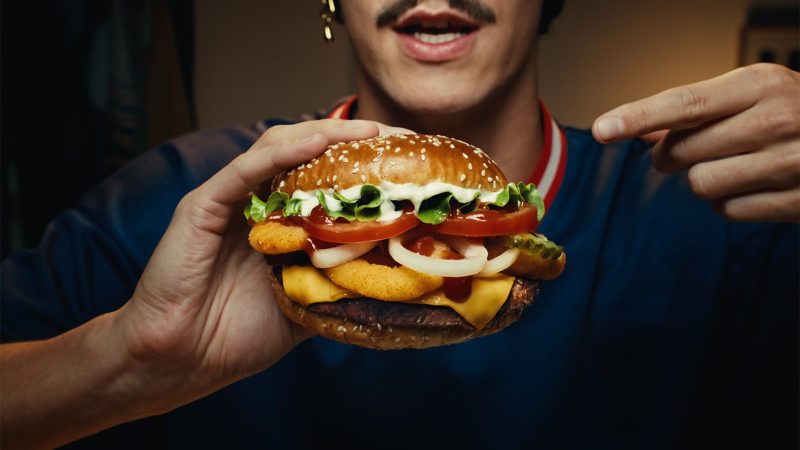
Burger King launched its Silent Campaign on November 16, featuring unedited audio of people eating – no music, no narration, no polish. The unwrapping of the meal, the crunch of the lettuce... a mouthwatering ASMR experience.
The seasonal pivot
As competitors faced backlash for overly produced holiday campaigns, Burger King’s sensory-first approach felt grounded and human.
Why it worked with Gen Z
Gen Z can spot perception management instantly. Burger King didn’t attempt to control interpretation. It let the product speak for itself. That restraint translated into fluency rather than performance.
SoFi (+7.5): Financial tools without the lecture
What changed in Q4
On November 5, SoFi named finance creator Vivian Tu (Your Rich BFF) as its first Chief of Financial Empowerment. Season 5 of Richer Lives followed with candid money conversations featuring figures such as Kenan Thompson and Ilona Maher.
The viral kick
The content shifted the frame from banking to future-building, landing as Gen Z began actively planning for 2026.
Why it worked with Gen Z
Financial control is foundational to sovereignty. SoFi removed moralizing and instruction, positioning money as a neutral tool for autonomy rather than a source of shame.
What this means for brand leaders
Gen Z equity is no longer driven by cultural visibility. It is driven by operational usefulness.
The brands that gained equity in Q4 shared three traits:
- They treated independence as a product feature
- They reduced reliance on external systems or algorithms
- They offered tools that scale personal control
If your brand doesn’t increase agency, Gen Z will deprioritize it – regardless of awareness, relevance, or creative quality.
Want to see what other brands’ equity increased in Q4? Request a demo of QuestBrand today.
FAQs: From clout to control
1. What does “from clout to control” actually mean?
It means Gen Z is moving away from brands that signal status or influence and toward brands that give them practical control over income, time, access, or risk. Visibility no longer equals value. Capability does.
2. Is this an anti-influencer or anti-culture shift?
No. Gen Z hasn’t rejected culture – they’ve rejected dependence on platforms and algorithms. Cultural relevance still matters, but it only translates into equity when paired with real-world usefulness.
3. Why did this shift accelerate in Q4 2025 specifically?
Q4 compressed several pressures at once:
- Rising cost of living
- Increased automation and AI-driven disruption
- Year-end financial planning and risk reassessment
Under pressure, Gen Z prioritized brands that reduced uncertainty and increased optionality.
4. What does “leverage” mean in this context?
Leverage refers to tools that multiply effort into outcomes. These are products or platforms that help Gen Z:
- Generate income
- Own relationships or distribution
- Reduce reliance on unstable systems
Leverage isn’t about aspiration – it’s about survivability and scale.
5. Why did Shopify and Patreon outperform more visible consumer brands?
Because they function as infrastructure, not symbols. Shopify enables income creation. Patreon enables income continuity. Both reduce dependency on employers or algorithms, which is central to Gen Z’s definition of security.
6. How can a traditional consumer brand like Tillamook fit into this narrative?
Leverage isn’t only digital. Tillamook provided product certainty at a moment when Gen Z is actively rejecting ultra-processed, opaque food systems. Clean inputs and visible production became a form of control.
7. Why did “quiet” or low-production campaigns work better than big holiday ads?
Gen Z is highly fluent in marketing mechanics. Over-produced messaging signals manipulation. Brands like Burger King gained equity by removing narrative control and letting the product speak, which read as honest rather than strategic.
8. How is this different from Millennial behavior in Q4?
Millennials rewarded brands that showed competence under pressure.
Gen Z rewarded brands that offered control under uncertainty.
One group asked, “Will this work when it matters?” The other asked, “Will I still be okay if things change?”
9. Does this mean brand storytelling no longer matters?
Storytelling still matters, but it must be anchored to function. Narrative without operational value decays faster with Gen Z than with any prior generation.
10. What’s the key takeaway for brand leaders?
Brand equity with Gen Z is now earned through operational usefulness, not cultural visibility.
If your brand doesn’t tangibly increase agency – by saving time, creating income, reducing risk, or simplifying decisions – Gen Z will quietly deprioritize it, regardless of awareness or creative quality.