
The most interesting Millennial brand stories aren’t coming from the top of the rankings – they’re coming from the brands consistently demonstrating the strongest growth. Here are the 5 brands to keep an eye on in 2026 and why.
Want to build momentum for your brand? Download the 2026 Brand Momentum Playbook.
When it comes to winning over Millennials, the rising stars will be the ones to watch in 2026. These aren't necessarily the brands with the highest momentum overall, but rather those exposing where Millennial priorities are shifting – not where they've settled.
These are the top 5 brands showing where Millennial momentum is heading and how you can tap into this momentum with Millennials.
- Apple TV+
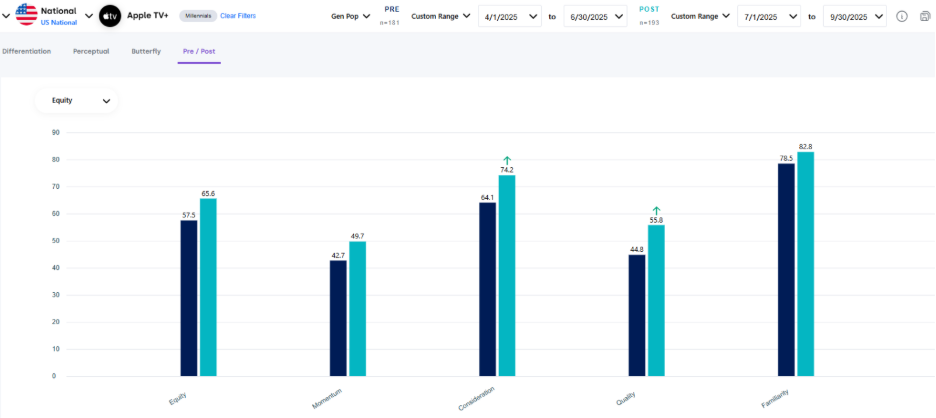
Apple TV+’s momentum with Millennials in 2025 was driven by a clear shift from shows that were “prestige but niche” to shows that were “reliably worth paying for” – anchored in content consistency and cultural relevance.
Firstly, the biggest driver was a run of high-impact returning series and breakout originals – Ted Lasso, Pluribus, Lessons In Chemistry, Severance, The Morning Show, Slow Horses, and Silo sustained conversation across the year, reinforcing Apple TV+ as a platform that delivers quality repeatedly, not sporadically. For Millennials, momentum builds when subscriptions feel justified month after month, not just for one tentpole release.
Secondly, Apple TV+ benefited from cultural legitimacy through awards and critical acclaim. Continued Emmy and awards-season recognition functioned as a shortcut for Millennials overwhelmed by choice: Apple TV+ equals “safe bet” viewing. Prestige here wasn’t abstract – it reduced decision fatigue.
Thirdly, bundling mattered. Inclusion in Apple One bundles and seamless integration across Apple devices lowered switching friction and reframed the service as part of a broader value package rather than a standalone cost.
Momentum was amplified by measured expansion into mainstream genres. While retaining its premium positioning, Apple TV+ leaned further into sci-fi, thrillers, and globally appealing dramas – genres Millennials consistently return to.
Apple TV+ grew momentum by consistently delivering high-quality experiences. For Millennials, trust, consistency, and low-friction value matter more than volume.
- Tillamook
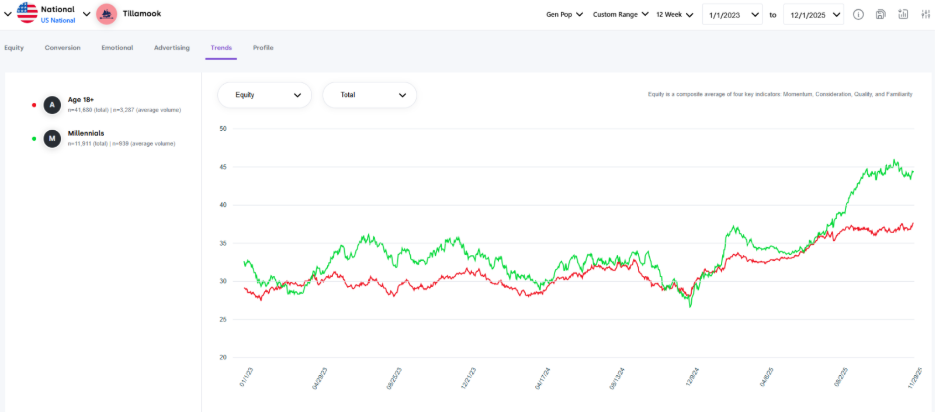
Dairy brand Tillamook’s momentum with Millennials accelerated because the brand shifted from being liked to being relied on – driven by visible expansion, disciplined consistency, and credibility under everyday pressure.
Its biggest driver was distribution and menu expansion, particularly deeper penetration into QSR and fast-casual dining. High-frequency exposure through foodservice made Tillamook feel less like a premium grocery treat and more like a default choice encountered in real life – burgers, melts, and comfort food moments Millennials buy often.
At retail, Tillamook doubled down on core product strength rather than novelty product launches. For Millennials under budget pressure, brands that deliver consistent quality without surprises perform better than those chasing trends.
Momentum was reinforced by earned media, and brand storytelling that highlighted Tillamook’s farmer-owned cooperative model. This wasn’t framed as a performative purpose; it was positioned as an operational reality – where the milk comes from, who benefits, and why quality stays high.
As Millennials leaned into cooking at home and value-seeking without trading down, Tillamook occupied the sweet spot between mass and premium – delivering visibly higher-quality cheese and ice cream at prices that still felt justifiable for everyday use, not just special occasions.
Tillamook’s momentum grew because it became dependable at scale – familiar, visible, and worth the slight premium. For Millennials, reliable quality beats reinvention.
- Raising Cane’s
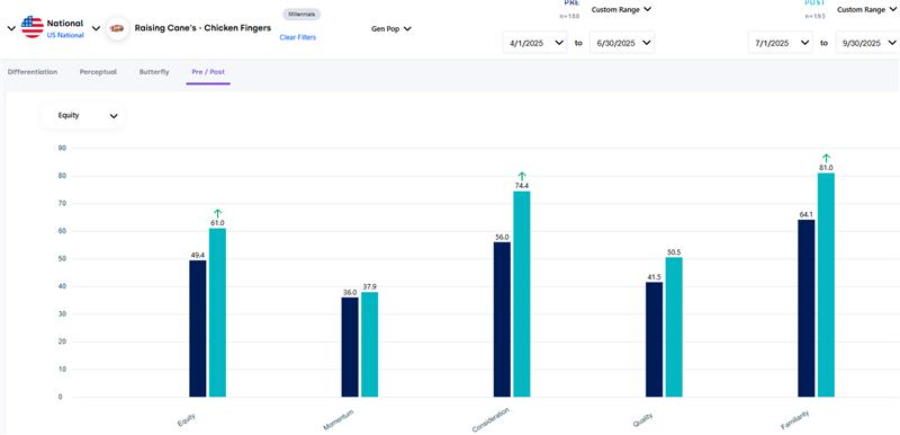
Chicken restaurant Raising Cane’s momentum with Millennials grew because the brand scaled without diluting simplicity – and made that discipline highly visible in culture, retail presence, and earned media.
The most important driver was aggressive U.S. expansion. New restaurant openings across secondary and suburban markets increased physical availability for Millennials who prioritize convenience and reliability over novelty. Cane’s became easier to access in everyday routines, not just a destination brand. Expansion itself became news, reinforcing growth momentum. (Source: Reuters, 2025)
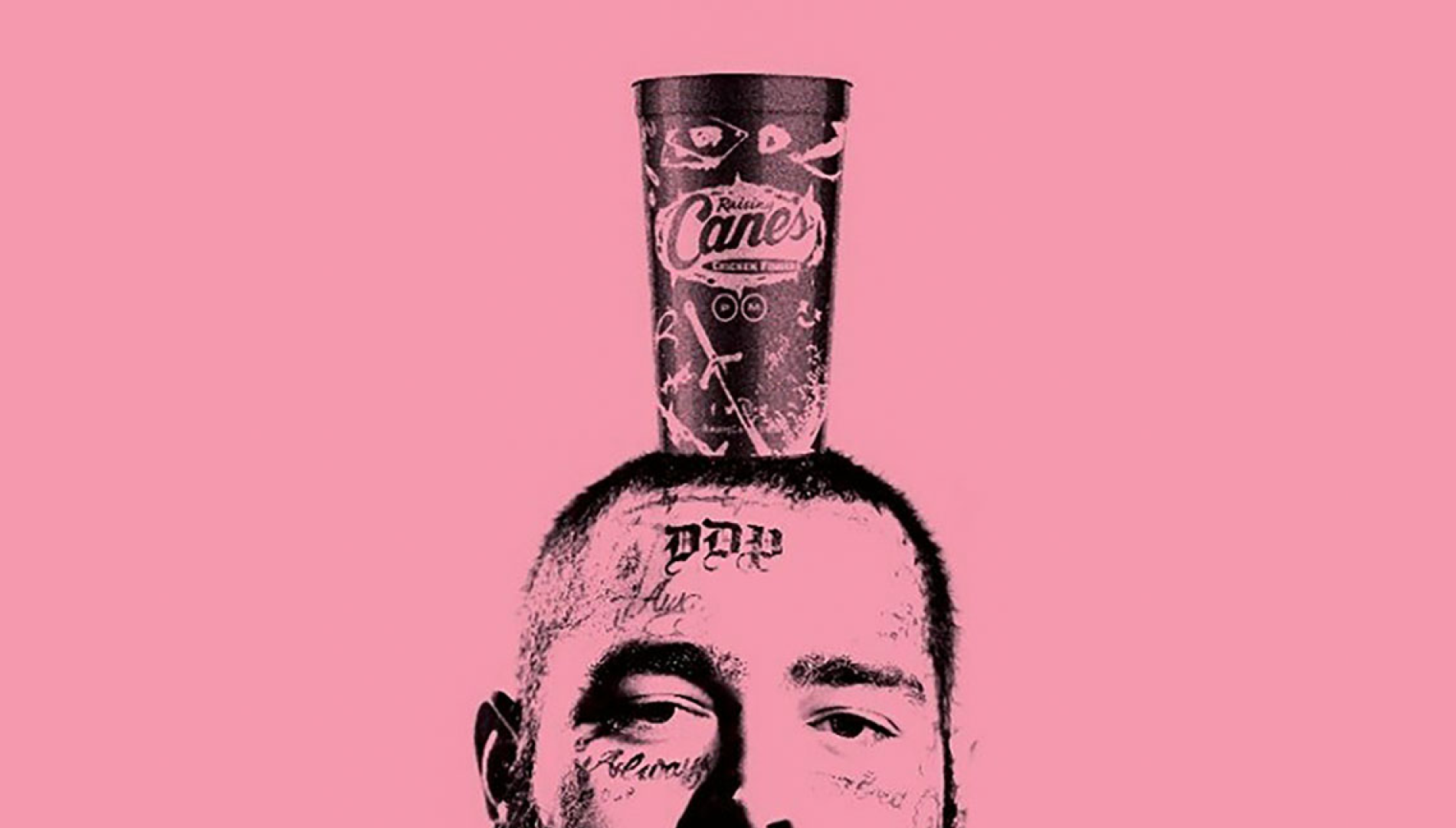
Secondly, celebrity association was operational and cosmetic. Post Malone’s role as both franchise owner and brand ambassador signaled genuine brand love rather than just a paid-for endorsement. Post Malone, is a self-proclaimed "Caniac" and his franchises feature bright pink exteriors decorated with his tattoos, medieval-themed bathrooms, ping pong tables, and displays of his personal memorabilia like his guitars and tour outfits. The restaurants fulfill his childhood dream, while at the same time create a landmark for fans with no budget constraints on the creative design.
For Millennials, this reads as authenticity – a celebrity who is fully invested in the business, not just fronting a campaign. (Source: AdAge / CNBC coverage)
Thirdly, Cane’s continued to resist menu sprawl. In a category obsessed with innovation, Cane’s doubled down on a single core product. For Millennials managing decision fatigue and price sensitivity, that clarity builds trust: you know what you’re getting, every time.
Momentum was amplified by social-first visibility. TikTok and Instagram content – particularly around Cane’s sauce, box combos, and in-store experiences – sustained organic advocacy without the brand chasing trends it couldn’t operationalize at scale. (Source: WSJ / AdAge).
Finally, as Millennials traded down from casual dining but still wanted something better than generic fast food, Cane’s occupied a clear middle ground.
Ultimately, Raising Cane’s momentum has grown by being relentlessly consistent, culturally present, and physically everywhere Millennials live. The restaurant chain doesn’t fight for attention; it fits into Millennial routines. This frictionless integration is doing more for growth than novelty ever could.
- SKIMS
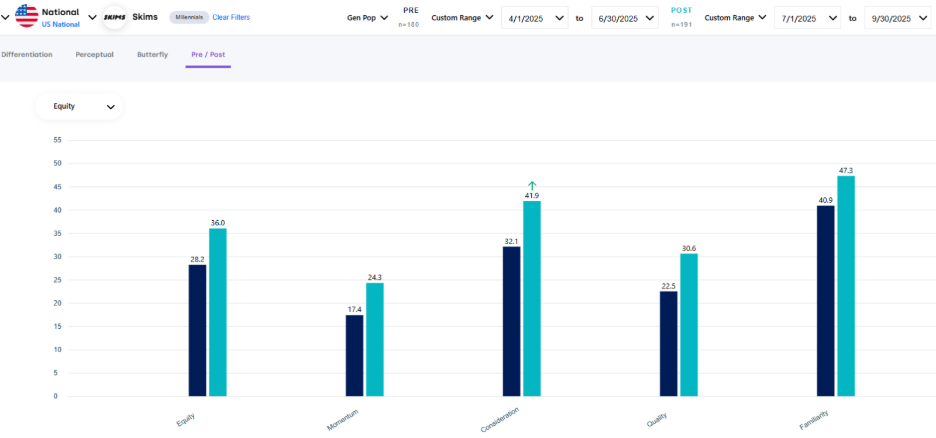
Shapewear brand SKIMS’ momentum with Millennials strengthened in 2025 because the brand moved decisively from cultural relevance to functional indispensability.
The NikeSKIMS partnership announcement was the single biggest inflection point. It reframed Skims as performance-legitimate, not just aesthetically driven, addressing a core Millennial concern: durability and real-world use. Extended press coverage – including reporting on the delayed rollout – kept the partnership top-of-mind across months, reinforcing consideration rather than delivering a short spike.
SKIMS also owned Millennial life stages. The 2025 Wedding Shop campaign positioned the brand as the default underlayer for weddings, honeymoons, and formalwear – moments where they want to feel confident. Valentine’s campaigns similarly leaned into self-purchase and practical gifting, aligning with how Millennials actually buy.
Momentum was further supported by credible category expansion. The Seamless Sculpt Face Wrap pushed SKIMS’ compression expertise into beauty-adjacent routines, tapping Millennial interest in efficiency without forcing new lengthy habits.
Also, scale signals mattered. The $225M fundraising round, retail expansion, and international growth reduced perceived risk. For Millennials, this communicates permanence – a brand safe to invest in repeatedly.
SKIMS grew momentum with Millennials by reducing compromise – pairing utility, life-stage relevance, and long-term stability into one coherent brand story.
By focusing on fit, comfort, and versatility, the brand has turned everyday functionality into confidence. Cultural relevance exists, but it is secondary. Performance comes first.
For Millennials, SKIMS represents a broader shift: brands that improve daily life in small, tangible ways earn loyalty faster than those built primarily on image. Utility is the hook. Identity follows.
- ChatGPT
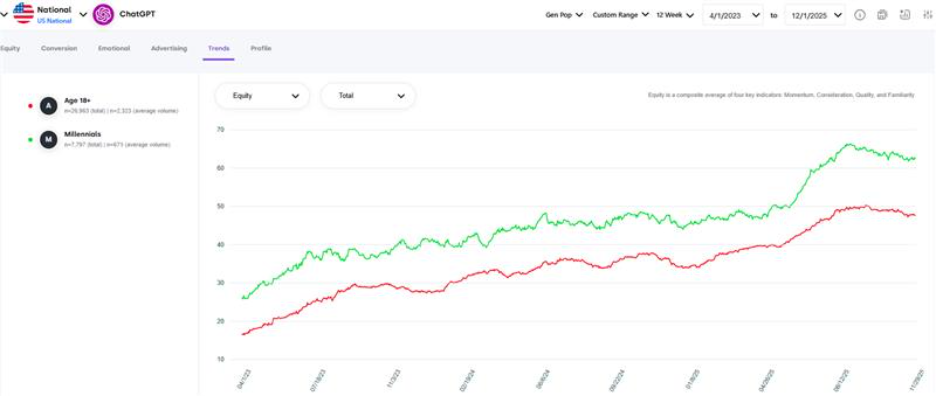
Few brands illustrate the shift from curiosity to dependency as clearly as ChatGPT.
ChatGPT’s momentum with Millennials accelerated in 2025 because it crossed a critical line: from an interesting AI tool to daily life. The tool is becoming commonplace, accessible, and practical for day-to-day activities.
The primary driver was product expansion into everyday workflows. Ongoing improvements to reasoning, memory, file handling, and multimodal input made ChatGPT materially better at tasks Millennials care about – work deliverables, side projects, job searching, parenting logistics, travel planning, and personal admin. This reduced friction and increased daily reliance.
Second, workplace normalization matters. As employers increasingly accepted – and in some cases encouraged – AI assistance, ChatGPT shifted from “grey-area productivity hack” to sanctioned efficiency tool. For Millennials balancing career pressure and time scarcity, that legitimacy removed risk and accelerated adoption.
Third, platform ubiquity fuels habit formation. Native desktop and mobile apps, faster performance, and deeper integrations into browsers and operating systems made ChatGPT easier to reach than search engines – establishing it as the go-to over other research methods.
Momentum was amplified by earned media and cultural presence. Coverage increasingly framed ChatGPT as not just experimental AI, but also as the category leader shaping how people work and think – a signal Millennials interpret as “safe to commit.”
Finally, clear value exchange drove trust. Paid tiers, such as faster response times, greater privacy, and collaboration and scaling benefits were positioned around real gains in speed, quality, and capability, not abstract features.
ChatGPT grew momentum by becoming indispensable, legitimate, and repeatable. For Millennials, usefulness at scale beats fascination every time
Want to build this kind of momentum for your brand? Download the 2026 Brand Momentum Playbook.