

The launch of HarrisQuest in Europe coincides with a moment of deep consumer scepticism. Sarah Beams, Managing Director of The Harris Poll UK, explains what the data shows – and what brands need to do about it.
The Harris Poll's latest European research, Trends Shaping Europe, lands at a precise moment: only 18% of UK consumers feel financially better off despite inflation cooling.
An even more striking 87% feel they are no longer getting value for money from brands. And underpinning all of it is a default scepticism about brand communications that goes well beyond the usual discounting of advertising.
“Brand perception isn't stable enough to check in on occasionally. If you're not tracking it continuously, you're always slightly behind.”
- Sarah Beams, Harris Poll Managing Director, UK
"We're operating in a very different trust environment now," says Sarah Beams, Managing Director of The Harris Poll UK. "Ongoing economic pressure, political noise, and constant exposure to marketing have made consumers much more questioning by default. There's an assumption that what's being said won't quite match what's delivered."
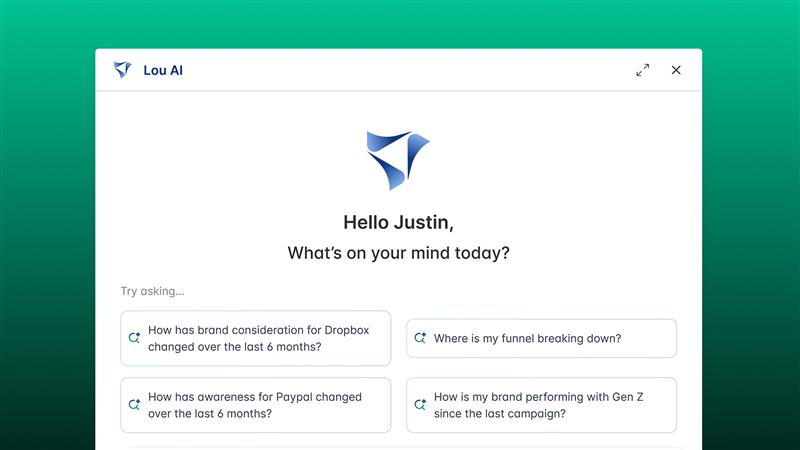
This is the context into which we're launching HarrisQuest in the UK and Europe. HarrisQuest is The Harris Poll's continuous brand intelligence platform – the only tool that measures brand health and institutional reputation together, in the same system, on the same panel, in real time across 24 markets.
HarrisQuest is built for exactly the environment Beams is describing: one where the gap between how a brand looks and how it's trusted can open up faster than quarterly research can catch it.
The gap between message and experience
The scepticism Beams describes is rooted in something concrete: the distance between what a brand says and what a consumer actually experiences.
Her example is instructive. During the energy crisis, British Gas publicly positioned itself as being on customers' side. For many consumers, the reality of rising bills and service difficulties told a different story. That gap – between institutional messaging and lived experience – is where trust collapses.
"That's exactly where scepticism takes hold," she says. "And once it does, it escalates quickly."
Value, right now, is the central battleground. But Beams is clear that value has moved well beyond price.
"It's about whether consumers feel they can justify the choice they're making, and whether the brand is on their side. Where brands go wrong is relying on tactics rather than substance. Short-term promotions, hidden compromises, or messaging that hasn't caught up with reality tend to backfire."
Tesco's Clubcard pricing is a case in point. The intent was to signal value. For some customers, it felt conditional – and conditional value quickly becomes a question of fairness. Once consumers start asking whether they're getting the best possible deal, you've moved from a commercial conversation to a trust conversation.
What the ALDI data tells premium brands
One of the most striking findings in the European dataset is the erosion of the premium trust premium. ALDI, the value grocer, now matches premium grocery brands on trust.
When a value grocer matches you on trust, cutting prices won't close the gap.
“Trust is no longer tied to price or heritage. It's about fairness, consistency, and delivery.”
- Sarah Beams, Harris Poll Managing Director, UK
The HarrisQuest data shows the trust gap that once justified the price gap has now closed.
"This reflects a broader shift in how trust is earned," says Beams. "It's no longer tied to price or heritage. It's about fairness, consistency, and delivery. ALDI has been very effective at signalling that."
ALDI's momentum score sits at 46.7 against a premium grocery brand equivalent of 24.7 – a gap that reflects genuine movement in how consumers are reassessing value.
The implication for premium brands is uncomfortable but clear. The moat has been crossed. Defending a price premium now requires active, visible proof of value – not heritage, not assumed quality, and not messaging alone.
For premium brands, the priority is to dial up relevance," Beams says. "At HarrisQuest we measure Cultural Relevance by asking consumers how much a brand is shaping the trends and conversations happening today.
"Fairness and progress have become the lens through which consumers judge value,” she explains. “It's about whether people feel a brand is on their side and helping them move in the right direction.”
This is where relevance becomes really important. Of all the dimensions we track, relevance is the most responsive. A brand can pivot its relevance relatively quickly – through the actions it takes, the causes it aligns with, the way it shows up for customers. But relevance that runs ahead of trust doesn't hold. Consumers are very good at detecting the difference between a brand that is genuinely progressing and one that is performing progress.
“The brands doing well right now are the ones where fairness, relevance, and a credible sense of direction are all moving together. When that alignment is visible, consumers reward it."
The trust relevance gap: Fragility hiding in plain sight
The Exposure Gap is one of HarrisQuest's most powerful diagnostic concepts. It measures the distance between how culturally present a brand is – its relevance – and how institutionally trusted it is. When relevance outpaces trust, a brand can look and feel strong while quietly accumulating fragility.
"If relevance is doing more of the work than trust, you can look strong right up until the point where that balance shifts – and then the correction is abrupt."
Boohoo is a near-perfect case study.
"Boohoo built relevance very quickly," says Beams. "It was on trend, highly visible, and accessible, particularly for younger consumers. Trust was building more slowly underneath that."
The brand looked healthy across almost every surface metric – strong awareness, strong consideration among its target audience, genuine cultural cut-through. But when supply chain issues around underpaid UK workers surfaced, trust became the dominant lens overnight.
"That's the Trust Relevance Gap in practice," Beams says. "If relevance is doing more of the work than trust, you can look strong right up until the point where that balance shifts – and then the correction is abrupt."
This is the pattern HarrisQuest is designed to catch. Not just what consumers think of a brand today, but whether the foundations are sound. A brand can hold a stable composite score while Trust and Relevance are moving in opposite directions.
Why brand and reputation must be measured together
In the UK and across Europe, consumers don't separate what a company sells from how it behaves. Leadership decisions, corporate actions, and perceived fairness all feed directly into how the brand is judged. That's not new, but the speed at which institutional conduct now moves through brand perception has increased significantly.
"You have to measure brand and reputation together, because consumers already do."
- Sarah Beams, Harris Poll Managing Director, UK
The Tesla data makes the point sharply. Earlier Harris Poll UK research showed that news of Elon Musk's pay package alone made over a third of Brits less likely to buy one. The product and the technology were unchanged, but sentiment shifted.
"That's why you have to measure brand and reputation together," Beams says, "because consumers already do."
Most traditional research approaches don't capture that interaction. Brand health surveys tell you about product consideration. Reputation surveys tell you about institutional credibility. But the mechanism that connects them – the way institutional trust functions as a perceptual lens through which product quality is evaluated – remains invisible if you're running the two systems separately.
HarrisQuest’s data consistently shows that around 70% of quality perception variance is institutional. Most of what consumers think about a product's quality has nothing to do with the product itself. It's shaped by how much they trust the company behind it, how ethical they think it is, and how they perceive it as an employer – since workplace culture signals how a company treats people broadly.
Trust, ethics, and workplace culture explain most of what consumers think about a product – before the product even enters the picture. When quality perception declines and nothing has changed in the product, the problem belongs to the C-suite, not the product team.
This is what Beams means when she says UK and European brands have nowhere to hide.
"A company living and breathing their purpose in everything they do is an absolute must for UK consumers," she says. "And that means you can have stable product scores while sentiment is shifting underneath. Looking at brand and reputation together gives you a much clearer view of whether performance is genuinely strong or starting to weaken."
The generational data that challenges conventional wisdom
Two findings from the European dataset deserve attention from agency planners in particular.
First: British Airways has stronger momentum with Gen Z and Millennials (41.8) than with Gen X and Boomers (16.5). For a legacy carrier operating in a category where younger consumers are assumed to be most price-sensitive and least brand-loyal, that's a significant counternarrative.
"Younger audiences are responding more to recent experience than legacy reputation," Beams explains. "Improvements in digital journeys, service recovery, and overall ease matter more than what the brand stood for historically."
For younger consumers, experience isn't just an operational measure – it's proof of purpose. Consistency in delivery earns momentum with Gen Z far more reliably than heritage.
Boots tells a similar story. Its momentum score with Gen Z is 42.3 – more than double its momentum with Gen X (20.6). A heritage pharmacy brand is outperforming with the youngest consumer cohort. The reason is the same: purpose-led campaigns that translate into visible, felt experience.
The broader principle: aggregate scores can hide this. A brand whose overall momentum looks flat might be quietly building a generational base – or quietly losing one. The segment-level data is where the actual story lives.
"That's where momentum data becomes useful," says Beams. "It shows you who is shifting before it shows up in the average, and that gives you a much clearer sense of where growth is likely to come from."
What ChatGPT's UK decline tells us about US tech brands in Europe
The ChatGPT data in the European research is particularly revealing for any brand managing perception across markets.
In Germany, ChatGPT's brand equity sits at 51.7. In the US, 50.2. In the UK, it's 42.6 – with a significant downward movement of -5.2 over the past 90 days. Momentum, consideration, and quality ratings are all declining in the UK, against a backdrop of rising scores elsewhere.
"UK audiences tend to be more sceptical of US tech narratives," Beams says. "There's less willingness to accept the upside without questioning the broader impact – whether that's around regulation, bias, or cultural effects."
The cross-demographic segmentation makes it more complex still. ChatGPT's declining consideration in the UK spans political divides and generations – right-wing and left-wing audiences are both tracking downward, as are older cohorts. Only Gen Z and Millennials are maintaining relatively stronger consideration, and even these are trending down since the OpenAI military contract dispute in early March.
The pattern points to something broader than a US-brand-in-UK-market problem: perception fragments quickly when institutional credibility is uncertain, and the shape of that fragmentation differs significantly across European markets.
"It underlines the importance of multi-market measurement," Beams says. "If you're only looking at one market, you miss that divergence."
The case for always-on
UK and European research agencies have historically worked to a rhythm defined by bespoke studies. A brief comes in. A study is commissioned. Results land three months later. Recommendations follow.
That rhythm is no longer adequate for the environment brands are operating in.
"Brand perception isn't stable enough to check in on occasionally," Beams says. "If you're not tracking it continuously, you're always slightly behind what's actually happening."
Continuous tracking doesn't replace bespoke research. Beams is clear about that. But it changes how bespoke research works.
"You have a continuous understanding of the market, and then you go deeper where there's something to explore. Bespoke studies become more targeted, more efficiently deployed – triggered by what the always-on data is showing you, rather than periodic intuition."
For agencies pitching this model to clients, the conversation looks different depending on who's in the room. CMOs need to understand the growth and risk dimension: how do you see opportunity earlier, and how do you avoid issues that aren't yet visible in traditional metrics? Insights directors need to understand rigour: how does this fit alongside existing approaches, and how does it improve confidence in outputs?
"Ultimately, both conversations are about making better decisions," Beams says. "Just from slightly different starting points."
One finding, one action
If there's a single implication for UK and European brands to take from this data, Beams is clear about what it is.
"I'd focus on the relationship between trust and relevance, because in this environment relevance is effectively a proxy for value. Relevance is what tells consumers that a brand understands their needs, and right now those needs are very clearly centred on value and fairness. Trust is what makes that believable over time."
The brands that are doing well are those where consumers feel both understood and confident in what they're getting.
"If either one drops away, performance becomes unstable quite quickly. That combination creates a level of resilience that's harder to disrupt."
The argument for continuous, multi-layered measurement is ultimately a commercial one – and it requires measuring the right things, at the right depth, all the time.
That's what HarrisQuest is built to do.
HarrisQuest is now live in the UK and across Europe. It tracks brand health and institutional reputation continuously across 24 markets, combining always-on data with AI-powered diagnostics to help brands and agencies see what's really happening – before it shows up in the numbers that matter most.
Find out more about how HarrisQuest can help your brand. Request a demo.
Frequently asked questions
What is the Trust-Relevance Gap?
The Trust-Relevance Gap – measured by HarrisQuest's Exposure Gap diagnostic – is the distance between how culturally present a brand is and how institutionally trusted it is. When relevance outpaces trust, a brand can look strong across surface metrics while quietly accumulating fragility. Boohoo is a case study: high relevance, lagging trust, and an abrupt correction when supply chain issues surfaced.
Why do 87% of UK consumers feel they're not getting value for money?
Harris Poll's Trends Shaping Europe research shows that value has moved well beyond price. Consumers are judging whether brands are on their side – whether what's being promised matches what's delivered. Economic pressure and constant exposure to marketing have raised the baseline level of scepticism, so brands relying on messaging alone are starting from a position of distrust.
Why does ALDI now match premium grocery brands on trust?
HarrisQuest data shows ALDI's momentum score at 46.7 against a premium grocery equivalent of 24.7. The gap reflects a shift in how trust is earned: it's no longer tied to price or heritage, but to fairness, consistency, and delivery. ALDI has been effective at signalling all three – and premium brands have been slow to respond.
What does it mean that 70% of quality perception is institutional?
HarrisQuest data consistently shows that around 70% of variance in how consumers perceive a product's quality is shaped by institutional factors – how much they trust the company, how ethical they think it is, and how they perceive it as an employer. This means when quality perception drops and the product hasn't changed, the problem belongs to the C-suite, not the product team.
Why is ChatGPT's brand equity lower in the UK than in Germany or the US?
ChatGPT's brand equity in the UK stands at 42.6, compared to 51.7 in Germany and 50.2 in the US – with a -5.2 movement over the past 90 days. UK audiences are more sceptical of US tech narratives, with less willingness to accept the upside without questioning wider impact. The decline spans political divides and age groups, and has accelerated since the OpenAI military contract dispute in early March.
What is always-on brand tracking and why does it matter now?
Always-on tracking means measuring brand health and reputation continuously, rather than through periodic bespoke studies. HarrisQuest provides continuous tracking across 24 markets. In an environment where brand perception can shift quickly – as the Tesla and Boohoo examples show – waiting three months for research results means you're always slightly behind what's actually happening.
What is HarrisQuest and what makes it different?
HarrisQuest is The Harris Poll's continuous brand intelligence platform. It's the only tool that measures brand health and institutional reputation together, in the same system, on the same panel, in real time across 24 markets. Most platforms measure brand and reputation separately, leaving the interaction between them invisible. HarrisQuest is built to capture that interaction – and the Exposure Gap diagnostic is designed specifically to identify fragility before it shows up in traditional metrics.